

Clinical communication and collaboration (CC&C) is the backbone of modern healthcare delivery. Behind every diagnosis, every handoff, and every rapid response is a network of clinicians who rely on timely, accurate information to make the right decisions for their patients.
But as care becomes more distributed and patient needs become more complex, the old ways of communicating — pagers, phone tag, paper schedules, siloed systems — no longer match the speed and coordination that safe, high-quality care requires. Effective CC&C has become a non-negotiable pillar of clinical excellence.
This guide explains what CC&C truly means, how it works, the workflows it supports, the technology behind it, and how healthcare teams can build a reliable, modern communication ecosystem that improves outcomes and reduces burnout.
What Is Clinical Communication & Collaboration (CC&C)?
Clinical Communication & Collaboration refers to the framework of tools, processes, and workflows that enable clinicians to exchange information in real time, securely, and with full context. It ensures that the right information reaches the right clinician at the right moment to support timely decisions and coordinated care.
In practice, CC&C includes a wide range of interactions: physician-to-nurse updates, cross-department consult requests, escalations triggered by patient deterioration, and secure communication triggered by EHR or monitoring systems. It is as much about how teams communicate as what they communicate.
Key aspects of CC&C include:
-
Secure, HIPAA-compliant communication
-
Real-time clinical collaboration
-
Automated routing and escalations based on on-call schedules
-
Integrated workflows tied to EHRs and monitoring systems
-
Post-discharge callback routing (for patients and caregivers)
-
Support for care-team coordination across inpatient, outpatient, home health, EMS, and specialty environments
Taken together, CC&C provides structure, clarity, and accountability across clinical workflows, ensuring information moves with accuracy and purpose.
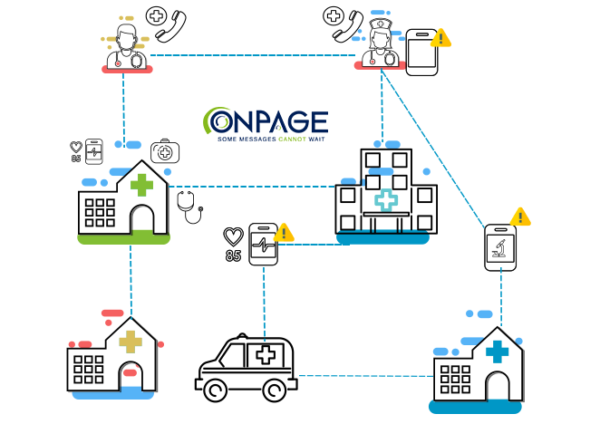
The Three C’s: Communication, Collaboration & Coordination
The foundation of CC&C rests on three interdependent pillars. While each plays a distinct role, they work best when aligned as part of a unified strategy.
1. Communication
Communication is the rapid, context-rich exchange of information between clinicians, staff, and—when appropriate—patients or caregivers after discharge. It goes well beyond secure texting. It encompasses how critical details move between people in real time, how decisions are supported, and how care teams stay aligned even when they’re not physically together.
Examples of communication activities include:
-
Secure, HIPAA-compliant messaging that supports text, images, and attachments
-
Real-time updates from EHRs or monitoring systems informing clinicians of patient changes
-
After-hours routing of patient or caregiver calls to the correct on-call clinician
-
Two-way mobile communication that eliminates delays caused by pagers or phone tag
Effective communication reduces uncertainty, accelerates decisions, and ensures clinicians receive timely information without interruption to their workflow.
See also:
HIPAA-Compliant Messaging
Patient-Doctor Communication
2. Collaboration
Collaboration is how healthcare professionals work together—sharing insights, forming plans, coordinating tasks, and ensuring that each clinician has the information they need to contribute effectively to patient care. It thrives when communication is clear and roles are well-defined.
Examples of collaborative moments include:
-
Nurses and physicians jointly determining next steps during patient deterioration
-
Specialists providing consult input to hospitalists or ED teams
-
Cross-disciplinary teams aligning on treatment plans
-
Ongoing case discussions between inpatient and outpatient clinicians
Collaboration supports shared decision-making, deepens clinical understanding, and ensures consistency across all members of the care team.
See also:
Clinical Collaboration System
Care Team Collaboration
3. Coordination
Coordination ensures that clinical tasks, alerts, and messages reach the right person instantly—based on who is on call, what role is needed, and how urgent the situation is. Coordination is the operational backbone of CC&C, adding structure and automation to communication.
Examples of coordination include:
-
Automatically routing alerts to the correct specialist based on on-call schedules
-
Triggering escalations when a clinician does not acknowledge a message
-
Mobilizing multiple clinicians simultaneously during high-acuity events
-
Ensuring cross-department workflows (ED → Radiology → ICU) occur without delay
Where communication and collaboration describe human interaction, coordination ensures the system around those interactions operates with precision and reliability.
See also:
On-Call Management for Healthcare
Pager Replacement for Healthcare
Who’s Involved in Clinical Communication?
Engaging in clinical communication is a collaborative effort that spans various roles within the healthcare landscape, whether confined within a single medical facility or extending across multiple sites. Individuals may include anyone who handles patient information, including physicians, nurses, case managers, transition coordinators, health information specialists, administrators, and department heads.
Each participant in this intricate web of communication bears the responsibility of ensuring that the information they convey is not only accurate but also concise, secure, and up-to-date. The stakes are high, as errors, oversights, or missed messages have far-reaching consequences for patients who depend on the seamless functioning of healthcare systems. Beyond the human impact, miscommunication extracts a toll on resources, both in terms of finances and valuable time and manpower.
According to CRICO’s Strategies Comparative Benchmarking System analyzing 320,000 medical practice cases from over 400 hospitals in the US, it’s been determined that 38% of general medicine cases, 34% of nursing cases and 26% of surgery cases involved a communication failure causing severe ramification on patient’s well being.
Within this context, several typical clinical communication events illustrate the intricate nature of healthcare interactions:
- Care-Team Collaboration: A significant portion of clinical communication unfolds among the physicians, nurses, and specialists involved in a patient’s care. This includes sharing diagnoses, transferring charts during shift changes, and providing guidance relevant to the treatment plan.
- Cross-Functional Team Collaboration: Patient transfers between departments necessitate effective communication to guarantee seamless transitions across the continuum of care and avoid oversights that could lead to adverse outcomes.
- Coordinating Care Between Facilities: The transfer of a patient’s information to another healthcare setting (primary care physican, in-patient rehabilitation hospital, palliative and hospice, or home care) constitutes a common healthcare communication event, highlighting the interdependence of healthcare communication across facilities.
- Patient and Caregiver communication during discharge: Beyond professional interactions, clinical communication extends to exchanges between providers and patients. This includes providing post-surgical instructions, prescription information, and recommendations for follow-up care, with a focus on delivering easily understood advice to aid patients in managing their health.
Clinical Workflows Supported by CC&C
Modern healthcare environments are built on dozens of interconnected workflows that require coordination, timely updates, and efficient escalation pathways. CC&C provides the infrastructure that keeps each of these workflows moving smoothly.
A strong CC&C foundation helps clinicians respond quickly, coordinate across disciplines, and eliminate the lag created by pagers, phone tag, or siloed systems.
Examples of key clinical workflows include:
-
Nurse-to-physician escalation during changes in patient condition
-
Specialist activation when a consult or urgent evaluation is required
-
Cross-department communication between ED, Radiology, ICU, and inpatient units
-
Critical lab results routing to physicians with escalation if unacknowledged
-
Home health updates regarding patient deterioration or medication issues
-
Hospice and palliative care alerts requiring urgent review
-
Telemedicine consult routing for remote specialists
-
Behavioral health escalation workflows
-
Physician handoffs during shift changes
-
Inpatient and outpatient coordination among multidisciplinary teams
-
Emergency rapid response pathways (Code Blue, Code Stroke)
-
Mass notification to teams or departments during critical events
-
Alarm management workflows tied to monitoring systems
Each workflow benefits from clear routing, auditability, and real-time updates that ensure clinicians receive the information they need without delay.
Other Popular Workflows
-
Patient-to-provider communication covers after-hours post-discharge call routing to the on-duty clinician, helping reduce readmissions and patient anxiety.
-
Family/caregiver communication also applies only to post-discharge routing.
See also:
Alarm Management in Healthcare
Mass Notification for Hospitals
Clinical Settings That Rely on CC&C
Clinical communication is not confined to a single environment. It is a foundational capability across the entire continuum of care. Each setting has unique needs, but they all depend on timely communication, clear routing, and coordinated workflows to deliver safe, efficient care.
A modern CC&C platform supports a wide range of clinical contexts by adapting communication flows to match the intensity, pace, and complexity of each environment.
Examples of settings where CC&C is essential include:
-
Emergency Departments, where seconds matter and fast escalation determines outcomes
-
Inpatient units, where large multidisciplinary teams coordinate ongoing care
-
Outpatient clinics, where providers must manage follow-up, triage, and consult requests
-
Behavioral health settings, where secure, rapid communication prevents escalation
-
Home health and hospice, where caregivers often need immediate guidance
-
Telemedicine programs, where routing must cross physical and digital channels
-
Concierge and private practice environments, where after-hours patient needs require structured call routing
In each setting, CC&C ensures clinicians can collaborate effectively, escalate critical events, and close loops quickly — regardless of team size, specialty, or location.
See also:
OnPage for Emergency Departments
Inpatient Alerting & Messaging
Outpatient Clinical Communication
Behavioral Health Communication
Home Health & Hospice Messaging
Concierge Medicine Messaging
Telemedicine Clinical Messaging
Benefits to Clinical Communication
Most people know that CC&C is incredibly important, but do not know what strong communication actually does for a healthcare team. These are some of the benefits associated with strong CC&C:
- Enhanced Patient Safety
Enhancing CC&C methods within healthcare teams can ensure that patient information is exchanged promptly and accurately. By improving these measures, care providers gain the ability to make informed decisions promptly, leading to improvements in quality of care and ensuring patient safety.
- Improved Care Coordination
By aligning objectives and leveraging communication technologies, care coordination is enhanced among healthcare teams. This improvement in the CC&C plan ensures quality care by reducing redundant efforts across care teams and enables them to appropriately address each aspect of the treatment plan.
- Streamlined Decision-Making
Many advancements in CC&C systems allow for real-time communication between healthcare professionals and health monitoring systems. This swift communication enables physicians to immediately make critical decisions regarding patient health and treatment plans, leading to more efficient and effective healthcare delivery.
- Facilitating Continuity of Care
Strong CC&C is a driving factor for facilitating seamless patient transfers. As a result of these smooth transitions, patients who are transferred between specialists or facilities, receive an exceptional quality of care because of their well-informed physicians.
- Foster a Culture of Collective Knowledge
When CC&C is enhanced, healthcare teams create a more transparent environment that enables knowledge sharing and learning from one another. The exchange of collective knowledge leads to better-informed decisions across all disciples, ultimately leading to improved healthcare delivery.
Barriers to Clinical Communication
Achieving effective CC&C looks different for every healthcare organization, considering the various barriers they may face.
Here are some common barriers faced by healthcare organizations with limited CC&C plans:
- Fragmented Communication
Many healthcare teams are still using legacy technologies, like pagers, that hinder effective communication and minimize collaboration. It is important that healthcare organizations analyze their current communication methods, and adopt modern solutions that will ensure that they are using the best, quality communication methods for their team’s success.
- Change Resistance
Introducing alternatives to existing communication methods can present a challenge for healthcare teams that are accustomed to their traditional ways. So, teams must establish an effective approach to change management that will facilitate a seamless transition and minimize resistance, so that they can reap the benefits of strong CC&C.
- Lack of Technology
There are a variety of reasons that healthcare organizations may have limited access to advanced communication resources. So, this emphasizes the need for the exploration of alternative communication technologies and practices that will effectively improve CC&C for teams with limited access to technologies.
- Poor Interprofessional Communication
Interdisciplinary communication is often a leading cause of poor communication due to various jargon used across different disciplines. So, to ensure seamless communication and collaboration teams must be trained to deliver clear, concise messages that can be widely understood. By promoting interprofessional collaboration, care teams can enhance their collaborative efforts and provide exceptional patient care.
- One-Way Communication Channels
In the healthcare world, legacy technology often lacks the capability of seamless two-way communication. This impedes the success of care teams that require real-time collaboration while being physically apart. To enhance the effectiveness of care coordination, healthcare organizations must equip their teams with communication tools that allow two-way messaging.
Legacy vs. Modern CC&C Approaches
Many healthcare organizations still rely on outdated methods that were never designed for today’s interdisciplinary, mobile, and high-acuity environments. Modern CC&C platforms address these limitations by offering automation, mobility, and real-time collaboration.
Legacy methods include:
-
One-way pagers
-
Phone trees
-
Answering services
-
Siloed communication tools
-
Static paper schedules
-
Manual call routing
-
Fax or unencrypted email
Modern CC&C solutions provide:
-
Secure, encrypted two-way messaging
-
Escalation workflows to prevent missed alerts
-
Automated routing based on schedules and roles
-
Real-time alert delivery with read receipts
-
Seamless integrations with clinical systems
-
Mobile-first care coordination
-
Auditability for compliance and quality improvement
The shift from legacy to modern CC&C is not merely a technology upgrade — it’s a transformation in how healthcare teams operate and communicate.
Best Practices to Facilitate Clinical Communication
When looking to enhance CC&C, these are some of the best practices your team should follow:
- Host Care Team Huddles
Care teams who are collectively working with one patient, should conduct regular huddles – brief discussions about a patient’s condition and treatment plan to ensure that the entire care team is on the same page. By having routine huddles, teams can enhance collaboration, thus reducing potential medical errors, improving patient satisfaction.
- Establish a Guide for Handoff Communication
Handoff communication is a crucial part of patient care and can be a major factor in a patient’s health risks. Healthcare teams should establish a guide for handoff communications, to ensure the seamless transfer of sensitive patient information. This ensures that redundant efforts are reduced and accidental overdoses are avoided.
- Eliminate Legacy Technology
As mentioned previously, legacy technology, like pagers, can lead to fragmented communication, which results in poor patient outcomes. Healthcare teams should eliminate any technologies that hinder their performance, so that they can start fresh and enhance their CC&C plan.
- Adopt Digital Solutions to Manual Processes
Healthcare teams continue to rely on paper schedules and contact sheets, making communication with other staff members incredibly difficult. By researching and adopting digital solutions, healthcare teams can alleviate stress and reduce response times, improving the quality of care.
- Keep Electronic Health Records (EHR) Updated
Teams must make sure that they are continuously updating EHRs, so that care teams receive real-time updates and can make immediate changes to treatment plans where they are necessary. Additionally, this facilitates a culture of collective knowledge, empowering care providers to share their expertise and collaborate with their teams for the patient’s benefit.
Integrations That Power CC&C
Modern CC&C platforms rely heavily on integration. A communication system is only as strong as the data and workflows it connects to. When clinical tools operate in silos, critical updates can be missed — or delivered too late.
Integrations allow communication platforms to serve as the central “nerve center” for clinical coordination, ensuring alerts, messages, and updates flow consistently across systems.
Key integration categories include:
-
EHR/EMR systems, which send clinical alerts and patient context
-
Monitoring and alarm systems, which route critical updates directly to clinicians
-
On-call scheduling systems, which determine who should receive alerts
-
Nurse call and telephony platforms, centralizing escalation pathways
-
Mobile devices, enabling real-time responses from anywhere
-
Custom integrations via APIs for tailored workflows
With strong interoperability, CC&C platforms become the connective tissue that enables continuity, transparency, and safety in clinical workflows.
See also:
OnPage Healthcare Integrations
Analyzing Your Current Clinical Communications
Creating a CC&C plan is not a one-and-done process, it is an ongoing process that requires continuous improvement. So, teams should routinely analyze their communication plans, and identify pain points that may require improvement. This allows healthcare teams to ensure that their CC&C plan remains effective as technologies and strategies evolve.
These are some of the questions that should be taken into consideration when analyzing existing CC&C plans:
- Are the current workflows efficient?
There are often times when plans that worked in the past, may no longer be effective. So, when analyzing communication workflows, it is essential that teams are looking out for inefficiencies and bottlenecks that tend to arise as a result of the current CC&C plan. Eliminating inefficiencies during changing circumstances is vital for the success of care team coordination.
- What technology is currently being used?
Looking at the current communication technology and how it is being used is incredibly important to the CC&C plan. Teams must also see how often these technologies are actually being used to identify unnecessary costs and steps in the CC&C process. By removing unnecessary processes teams can optimize their resources to improve the effectiveness of their plan.
- Are there better alternatives to those technologies?
Even if a tool is being used and generally works, it may not be the best option for a healthcare team. So, it is crucial that they look into alternatives that will better fit their needs and empower healthcare teams to provide the best care possible.
- When care teams collaborate, is it compliant with HIPAA?
Common communication tools used in healthcare settings include pagers and instant messaging. Unfortunately neither of these tools are HIPAA compliant, if used incorrectly, so teams must look for HIPAA compliant options that will allow them to deliver contextual messages that enable them to make informed decisions while complying with privacy regulations.
- Do the current tools seamlessly integrate with each other?
Currently, there are many tools on the market that can integrate with each other and expedite processes. Teams should look into tools that integrate with each other to ensure the quick remediate of patient issues and changes to treatment plans. These tools foster a cohesive approach to healthcare delivery to ensure that patients receive the highest quality of care.
- Are there effective training tools in place?
When a new staff member is hired they must be well trained on the communication plans to ensure that information is seamlessly transferred between new and veteran staff. So, teams must assess their current training tools and ensure that new team members are adequately being trained on communication processes.
- Does the healthcare staff have any feedback about the CC&C plan?
It is also important to know what the staff who actively utilizes the CC&C plan thinks about it. So, management teams must actively seek feedback about CC&C plans to ensure efficient workflows that will improve patient care and foster collective knowledge. Organizations can create optimal strategies that will elevate the quality of healthcare delivery when they value the feedback from active users.
Improving Your CC&C Plan
Strengthening CC&C is not a one-time initiative — it requires continuous refinement as clinical environments evolve, technologies change, and teams grow. Improvement begins with identifying inefficiencies, but success depends on implementing structured updates that support long-term reliability.
Effective improvements focus on simplifying workflows, adopting modern tools, and ensuring teams have the guidance and training needed to adapt to change.
Practical improvements to consider include:
-
Establishing clear communication protocols so clinicians understand how and when to escalate information
-
Implementing centralized communication platforms that replace fragmented tools
-
Standardizing documentation and handoff processes to reduce variability
-
Digitizing manual workflows, replacing paper-based systems that slow teams down
-
Encouraging regular care-team huddles to align on patient priorities and updates
-
Reviewing workflows regularly to ensure continuous optimization
Each of these improvements strengthens care coordination, reduces friction in daily work, and supports a safer, more predictable care environment.
Navigating Change Management
Shifting from legacy communication tools to modern CC&C platforms often requires cultural changes as much as technological ones. Clinicians rely heavily on familiar workflows, so successful transitions require leadership, transparency, and shared ownership.
Change management ensures teams understand the purpose behind new initiatives and feel supported through training, questions, and iteration.
Important elements of CC&C-related change management:
-
Clearly communicate the goals and expected benefits of CC&C updates
-
Build a change management team with representation from different disciplines
-
Create a step-by-step plan that minimizes workflow disruptions
-
Offer comprehensive training that builds confidence and adoption
-
Encourage open feedback to identify pain points and refine workflows
With strong change management, modern CC&C solutions become well-adopted, trusted tools that elevate patient care rather than disrupt it.
Compliance, Auditability & Postmortem Reporting
Modern CC&C platforms must support not only communication, but also accountability. Clinical environments operate under strict regulatory requirements, and leaders need visibility into how, when, and why communication occurred — especially during escalations or adverse events.
Auditability ensures communication trails are traceable and complete, offering clarity for compliance teams, administrators, and accreditation bodies.
Key compliance and audit capabilities include:
-
End-to-end encryption for HIPAA compliance
-
Timestamped delivery and read/response receipts
-
Escalation logs showing message flow and clinician acknowledgements
-
On-call schedule change audits
-
Complete message history for quality review
-
Postmortem reporting that supports after-action analysis
These capabilities help hospitals identify gaps, improve response times, and demonstrate compliance with organizational and regulatory standards.
See also:
Postmortem Reporting Overview
Assess the Effectiveness of the Reformed Plan
Once all of the adjustments to the CC&C plan have been implemented, healthcare teams must conduct a thorough analysis of the effectiveness of the changes. By analyzing the changes, inefficiencies can immediately be identified and eradicated ensuring the success of the reformed CC&C plan. Additionally, it enables teams to gain insight into the strengths and weaknesses of the new plan, so that they can facilitate continuous improvement and refinement in the future.
How OnPage Supports CC&C
OnPage provides a modern, mobile-first platform that strengthens CC&C across clinical environments. Built to eliminate the limitations of pagers and fragmented communication tools, OnPage routes critical messages instantly, ensures escalations are never missed, and enables clinicians to collaborate around patient care in real time.
Key capabilities include:
-
Secure, HIPAA-compliant two-way messaging
-
Automated routing based on schedules, roles, and escalation rules
-
Real-time alert delivery with timestamps and read receipts
-
Role-based messaging to reduce delays and misrouting
-
Integration with EHRs, monitoring systems, and nurse call platforms
-
Mobile-friendly workflows for inpatient, outpatient, ED, and home health
-
Reliable communication over WiFi and cellular data
-
Full audit trails to support compliance and clinical governance
These capabilities help teams deliver faster, safer, and more coordinated care — reducing delays and ensuring that every message reaches the right clinician instantly.
See also:
Clinical Communications Platform
Pager Replacement for Healthcare
Popular Use Cases & Capabilities
CC&C platforms play a vital role in many day-to-day clinical scenarios — from managing alarms to ensuring smooth handoffs. These use cases demonstrate the breadth of communication challenges that modern platforms address.
Examples of common CC&C use cases include:
-
Alarm management, delivering actionable alerts directly to clinicians
-
Secure care-team messaging, enabling role-based collaboration
-
Critical results communication, routing urgent lab findings with escalation
-
Patient and family engagement, supporting structured post-discharge communication
-
Interoperability workflows, connecting EHRs, call systems, and monitoring tools
-
Postmortem reporting to improve outcomes and compliance
-
Mass notification during critical hospital events
See also:
Alarm Management
Secure Messaging
Care Team Collaboration
Critical Results Delivery
Patient & Family Engagement
Interoperability in Healthcare
Postmortem Reporting</a>
Mass Notification for Hospitals
References
[1] Phillips J, Klein J. Change Management: From Theory to Practice 2023; 67(1): 189–197. https://www.ncbi.nlm.nih.gov/pmc/articles/PMC9462626/
[2] Morris NA, Couperus C, Dezman Z, et al. Feasibility of accelerated code team activation with code button triggered smartphone notification; PMID: 3684267 doi: 10.1016/j.resuscitation.2023.109752 https://pubmed.ncbi.nlm.nih.gov/36842677/
Clinical Communication
-
-
What is clinical communication?
Clinical communication refers to the exchange of information among healthcare professionals within a clinical setting. It encompasses the seamless flow of critical data, messages, and updates among members of the healthcare teams to ensure effective collaboration, timely decision-making, and ultimately, improved patient care.
-
How do clinical communication platforms work?
These platforms route messages, alerts, and updates to the right clinician based on roles, schedules, and escalation rules. They support secure messaging, automated workflows, integrations, and real-time collaboration.
-
What does a clinical communication solution do?
A clinical communication solution is a specialized platform designed to enhance communication and collaboration in healthcare settings. It facilitates secure messaging, real-time alerts, and information sharing among healthcare professionals. Additionally, these solutions often integrate features like on-call schedules, critical result notifications, and role-based messaging, streamlining workflows and improving overall efficiency within clinical teams.
-
What are some common integrations for clinical communication platforms?
Clinical communication platforms often integrate with Electronic Health Records (EHR) systems, allowing seamless and secure access to patient information. They may also integrate with provider scheduling systems, dispatcher tools, organization directories, call center systems, nurse call systems and other third-party tools used in healthcare. Integration with organization directory, scheduling tools, and secure messaging protocols ensures a comprehensive and interconnected communication ecosystem tailored to the specific needs of healthcare providers.
-
How can my clinic/hospital choose the right clinical communication vendor?
Selecting the right clinical communication vendor is crucial for the success of your healthcare communication strategy. Consider factors such as:
Integration Capabilities: Ensure the platform can seamlessly integrate with your existing systems, such as EHRs and other healthcare software.
Security and Compliance: Prioritize vendors that adhere to healthcare data security standards and compliance regulations to protect patient information.
User-Friendly Interface: Choose a solution with an intuitive and user-friendly interface to encourage widespread adoption among healthcare staff.
Scalability: Select a vendor that can scale its solution to accommodate the growing needs of your clinic or hospital.
Training and Support: Look for vendors that provide comprehensive training and ongoing support to ensure a smooth implementation process and continued success in utilizing the platform.
By carefully considering these factors, you can identify a clinical communication vendor that aligns with the unique requirements of your clinic or hospital.
-


